A lot of couples dream of a dance floor that's full all night. The honest truth is that it doesn't just happen. Some of it is the band, but most of it is decided long before the band plays a note: where you get married, who's in the room, when the speeches finish, how you start the first dance, and what the room feels like once the lights go down. Here are ten things you can do to give yourselves the best dance floor possible, and make sure it starts strong.
We're a wedding band in Northern Ireland. We've watched a lot of floors from the stage, full ones and empty ones, and these are the things that make the difference.
1. Get married somewhere, and on a day, your people can manage
This one starts before you've booked anything. If your venue is two or two and a half hours from where your family, friends and church are, fewer people come, and the ones who do are tired and thinking about the drive home. With a smaller wedding especially, that's a dance floor that's hard to fill.
A venue close to where your communities live changes everything. People come for the evening because they can. You can invite a lot more evening guests and most of them will actually turn up. And the ones who'd stay till the end, do.
The date matters the same way. A Wednesday wedding is cheaper across the board, and we've said as much in our cost guide, but be honest about the trade: most of your guests are thinking about work in the morning, and the floor thins earlier than it would on a Saturday. If a full floor till the end is the priority, a Friday or Saturday gives you the best chance. If the midweek saving matters more, go for it and plan the evening to start strong.
2. Check the venue for noise restrictions before you book
Some venues have a sound limiter, a box that cuts the power to the stage if the music goes over a set volume, or a curfew that has the band off by eleven. Both can work with the right band and a bit of planning, but neither helps a dance floor. Ask the venue straight out before you sign: is there a sound limiter, what's it set to, and what time does the music have to stop? If you've got a choice of venues and one of them has no restrictions, that's a point in its favour.
3. Invite the people who come for the party
A dance floor is made of people who want to be on it. If you've got a youth fellowship, a youth group, a football team, a GAA club, a big group of cousins or a gang of mates who'll dance to anything, invite them, and if the day guest list is tight, invite them for the evening. Those are the people who are on the floor from the first song and still there at the end, and they pull everyone else up with them.
When you're deciding on evening guests, don't just think "who do we owe". Think "who'll dance".
And be realistic. If your guest list is mostly aunts, uncles and your parents' friends, you'll have a lovely wedding, but a floor that's packed till one in the morning probably isn't the night you're having. That's fine. Plan for the floor you've got, and invite the evening crowd that'll lift it.
4. Keep the energy moving from the meal to the floor
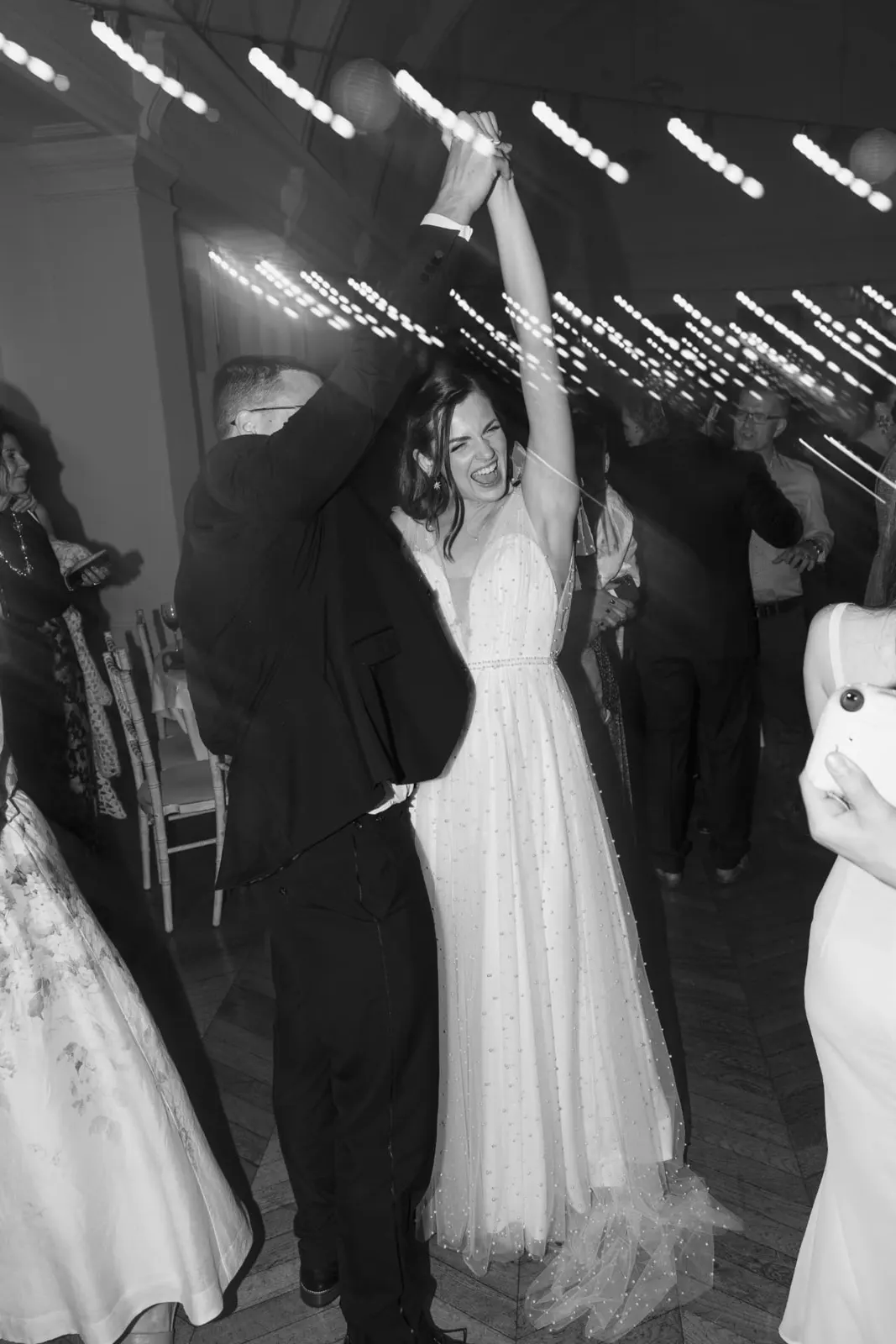
The biggest dance floor killer in Northern Ireland is a long gap between the end of the meal and the first dance. Speeches that start after the meal and run long, a room that has to be turned around, a band still setting up. By the time the first dance happens it's half nine, the room has sat for two hours and lost the energy it had at six.
Three things fix it. Speeches before the meal (five to seven minutes each, and someone holding them to it) so the room comes out of dinner ready to go. A venue where the band can set up somewhere other than the room you're eating in, so there's no turnaround at all and you move straight from the meal into the first dance. And a band that's quick to set up. Ask your venue how long bands usually take to turn around there. They see it every weekend and they'll tell you the truth.
5. Make the first dance a moment, not an announcement
The first dance matters because it's the start of your evening. It's the line between the meal and the party. So don't let it be "and now the first dance" to a room half-watching from their tables.
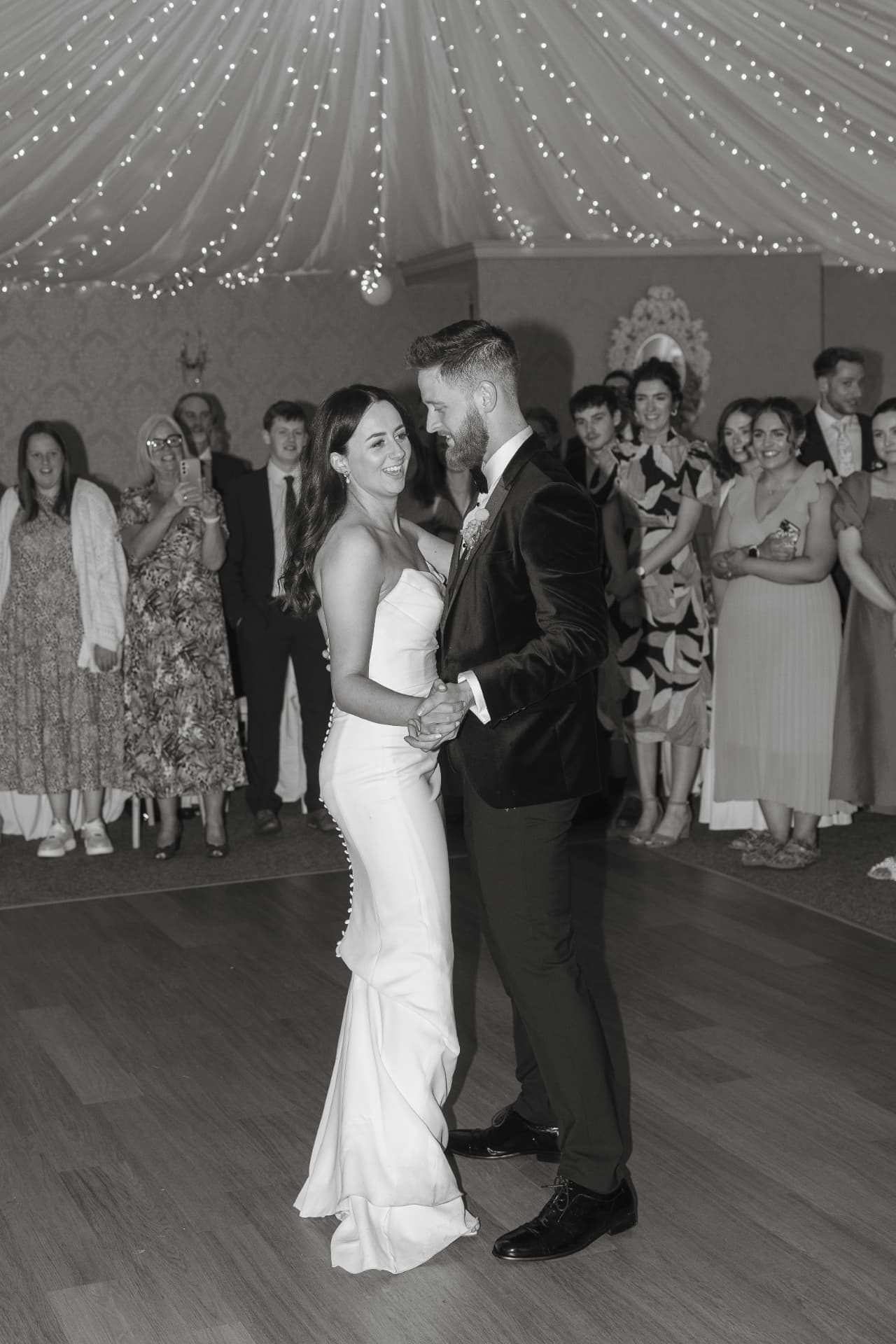
Here's what works. Before you come in, the band gets everyone up out of their seats and standing in a circle around the dance floor, and doesn't start until they have. All of a sudden every eye in the room is on the floor, not on a phone or halfway through a conversation at table nine. Then you make your entrance into that circle, and the anticipation's already built. It looks better, it feels better, and your photographer and videographer will thank you, because a first dance surrounded by a standing crowd photographs like a moment and a first dance in front of seated tables photographs like a meal.
Then stay on the floor. Your guests take their cue from you. If you dance one song and head off for photos, the floor empties behind you. Stay for the next three or four and the room follows. There's a separate post on choosing the first dance song itself.
One honest word on the father-daughter dance. It's a lovely thing and if it matters to you, do it. Just know that a second slow dance with everyone watching from the edge can take the air out of a room that was ready to party. If you want it, keep it short, or fold it into the next tip.
6. Keep the first dance short, then bring everyone in around you
This is the single best thing we see at weddings now, and it changes whether the floor starts well more than anything else on this list.
The reality is most couples don't want to do a full first dance with the whole room watching. So don't. Thirty seconds on your own is all you need for the photographs. Then, on a cue you've agreed with the band beforehand (the build-up to a big chorus works, or the switch into a second slow song if your first dance is a slow one), the singer invites every guest onto the floor to dance around you. Not the bridal party paired off (the groomsmen don't want to dance with a bridesmaid they met that morning, and it doesn't do anything for anyone). Everyone. Couples, parents, grandparents, the youth group, the whole room.
What you get is two hundred people on the floor for your first dance instead of two, and a moment that feels like it's straight out of a film. Your photographer and videographer get the shots of the night. Every guest has already been on the floor once, so the awkwardness is gone. And when the band kicks into the first set, the room is already loosened up and standing exactly where you want them. The circle from tip five, the thirty seconds, the invite, straight into the set: that's the start of a great dance floor.
7. Keep the playlist short
Give the band a handful of must-plays and the two or three songs you'd hate to hear. Then let them read the room. Forty songs in a fixed order, or a rule like "nothing cheesy", feels like control and on the night it ties the band's hands. The songs that fill a floor at an NI wedding aren't always the ones you'd put on your own playlist, because your granny, your mate from work and your cousin's kids all need something.
Family favourites are different. If there's a song your dad sings at every party, tell the band. Those get a whole table up.
8. Get the atmosphere right: dark enough to let go
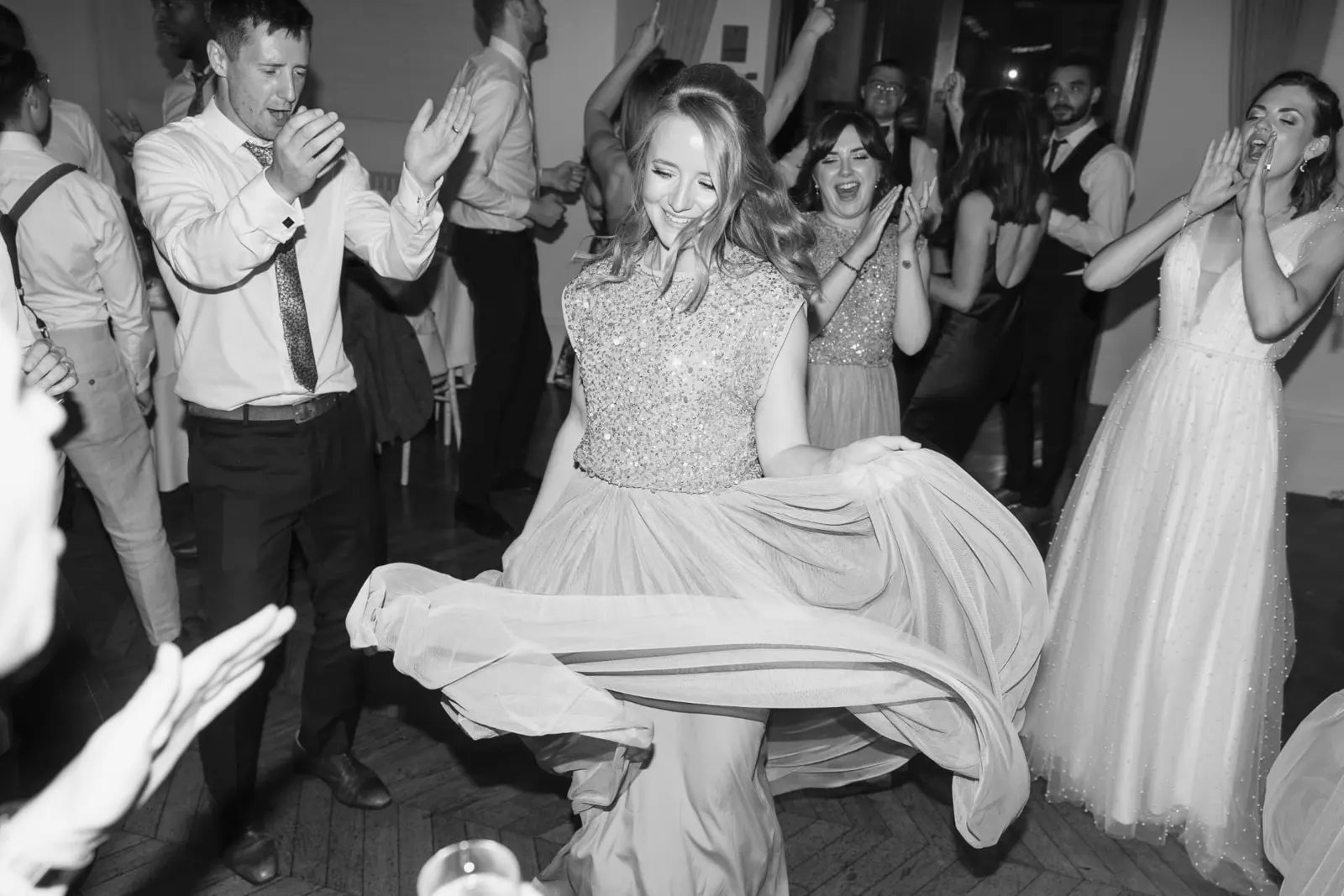
People dance when they feel safe to. A bright room is a hard room to dance in, because everyone feels watched. Lights down, properly down, so the band's lighting does the work and the floor feels like its own place. People let loose when they don't have a hundred eyes on them.
One thing to ask about in advance: your videographer's lights. Floodlights on the dance floor are great for the video, and they can completely change the feel of the room for the sake of a few clips. Have the conversation before the day. A good videographer will work with the band's lighting, or use their lights briefly and then kill them.
9. Set the room up for dancing
A few things, and the venue can sort most of them if you ask early. Size the floor for the crowd: a huge floor with fifty guests looks empty even when it isn't, so ask the venue to pull the tables in. Make sure it's an actual dance floor, wooden or proper boards, because nobody's doing a moonwalk on a musty old carpet. Keep the bar in the same room if you can, because a bar down a corridor costs you half the room every twenty minutes. And think about who sits where: the cousins who'll dance all night beside the floor, the older guests who'll get up if they can sit between songs near it, and nobody who wants to talk beside the PA.
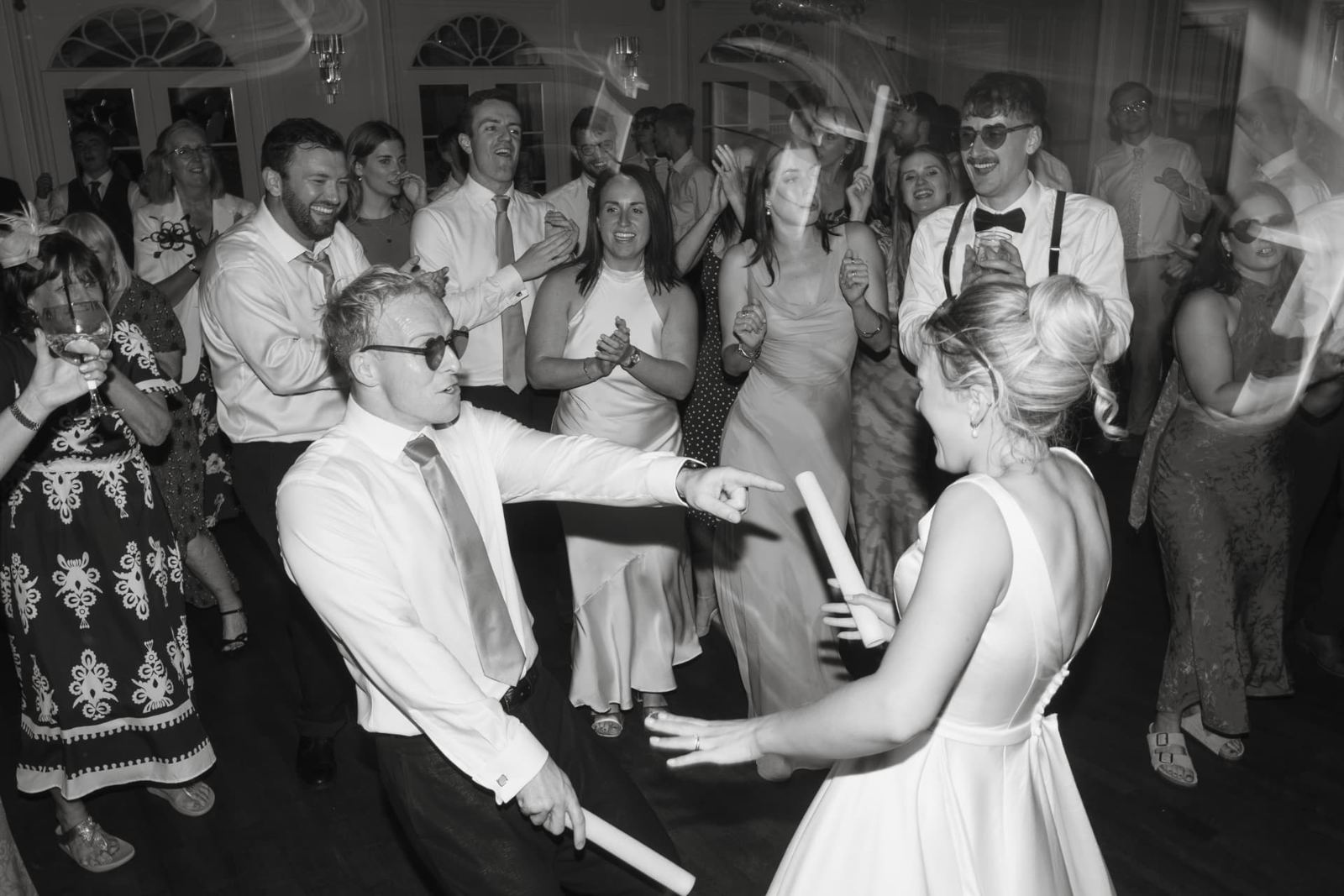
Then the daft stuff, which works every time: glow sticks, sunglasses, batons, inflatables, whatever. A box of them appearing at the right moment in the second set gives the floor a second wind.
10. Put the food in the break, and nothing else against the band
Food arriving while the band are playing clears a dance floor instantly and it doesn't always come back. The best time is during the band's break: everyone eats, nobody misses anything, and the second set starts with a room that's had a bite. The same goes for everything else: photo booth, sparklers, fireworks, the surprise cake, the late bar opening in another room. All lovely. None of them should land mid-set. One thing at a time, and the floor stays full.
What a good evening looks like
The shape most Northern Ireland weddings follow. Your ceremony time and number of courses will move it around a bit, but the order is what matters.
- 4.30 to 5.00: call for dinner
- 5.30 to 6.00: speeches, before the food
- 6.00 to 7.30 or 8.00: the meal, depending on courses. Band loading in and sound checking out of sight
- 8.00: evening guests arrive
- 8.30 or 9.00: everyone up in a circle, first dance, everyone invited in, band's first set straight after
- Band's break: evening food out
- Second set
- DJ until the end
If your meal runs late, everything moves back. That's fine as long as the band are booked for a set length and not a finish time. Our questions to ask a wedding band covers that one.
The honest bit
Do most of these and the band's job gets easy. Do none of them and a good band will still get people up, but it's harder work and the floor thins earlier than it should. We'd rather say it now than watch it happen in July.